


Many Denver patients ask the same question before scheduling a whitening appointment: is professional teeth whitening safe for your enamel and gums in Denver? It is a fair concern. Your enamel protects your teeth every day. Your gums are sensitive tissue that deserves careful treatment. The good news is that professional whitening, when done correctly, is considered safe for most healthy adults. This article breaks down what the research says, who may need to be cautious, and what to expect from a supervised whitening treatment at Denver Orthodontics & Dental Lounge.
How Professional Teeth Whitening Works on Enamel
Professional whitening uses hydrogen peroxide or carbamide peroxide as the active bleaching agent. These compounds penetrate the outer enamel layer and break apart the chemical bonds in stain molecules. The enamel itself is not dissolved or stripped away during this process. Instead, the stains trapped inside the enamel are lightened at a molecular level.
This is an important distinction. Many patients worry that whitening removes enamel. Scientific evidence does not support that claim when professional-strength products are used as directed. The American Dental Association recognizes hydrogen peroxide whitening agents as safe and effective for most patients.
However, enamel can become temporarily more porous after whitening. This is why some patients notice increased sensitivity to hot or cold foods for a day or two after treatment. That sensitivity typically resolves on its own within 48 hours. Dr. Desirea Scott recommends using a sensitivity toothpaste before and after your whitening session to minimize discomfort.
Is Professional Teeth Whitening Safe for Your Gums in Denver?
Gum safety is another common concern. Over-the-counter whitening strips often fit poorly and can allow bleaching gel to contact the gumline directly. That contact causes irritation, redness, or a burning sensation for some patients. Professional whitening avoids this problem through customized application techniques.
At Denver Orthodontics & Dental Lounge, Dr. Scott uses custom-fitted whitening trays or carefully applies a protective barrier to the gum tissue before treatment begins. This dramatically reduces the risk of gum irritation. Any mild sensitivity that does occur usually fades within a day.
Patients with existing gum disease, receding gums, or significant gum inflammation should discuss these conditions with Dr. Scott before whitening. Active gum disease can make the tissue more vulnerable to irritation from bleaching agents. Treating the underlying gum condition first is always the safer path.
Who Should Avoid Professional Teeth Whitening?
Professional whitening is not the right choice for every patient. Understanding these exceptions helps you make an informed decision about your own care.
Patients who should approach whitening with caution or avoid it entirely include:
- Pregnant or nursing women, as a precaution recommended by most dental professionals
- Children and teenagers whose enamel is still developing
- Patients with untreated cavities or exposed root surfaces
- Those with severe gum disease or significant gum recession
- Patients with crowns, veneers, or dental bonding on front teeth, since whitening does not change the color of restorations
- People with known allergies to peroxide-based products
If you have dental restorations on visible front teeth, whitening your natural teeth can actually create a color mismatch. Dr. Scott will evaluate your full smile before recommending any whitening treatment. Honest, individualized guidance is always the priority at Denver Orthodontics & Dental Lounge.
Professional Whitening vs. Store-Bought Products: What Is Safer?
This is one of the most frequent questions Denver patients raise. Store-bought whitening strips and gels are widely available and heavily marketed. They contain lower concentrations of bleaching agents, typically between 3% and 10% hydrogen peroxide. Professional whitening treatments use concentrations that range from 15% to 40% under controlled conditions.
Higher concentration does not automatically mean more danger. The key difference is supervision and customization. Dr. Scott examines your teeth and gums before treatment begins. She identifies any issues that could increase your risk of sensitivity or irritation. That screening step simply does not happen with an at-home strip.
Benefits of choosing professional whitening over store-bought alternatives include:
- Custom-fitted trays that protect gum tissue during treatment
- Pre-treatment examination to identify cavities or sensitivity risks
- Faster, more uniform results across all visible teeth
- Post-treatment guidance to protect your results and manage sensitivity
- Access to prescription-strength desensitizing agents if needed
Patients who want straighter teeth alongside a brighter smile may also want to explore Invisalign Denver as part of a comprehensive smile transformation. Dr. Scott can coordinate both treatments for a more complete outcome. Similarly, patients in the Highlands area can learn about Invisalign Highlands Denver to see if clear aligner therapy fits their goals alongside whitening.
What to Expect During a Professional Whitening Appointment
Knowing what happens during treatment helps reduce anxiety and sets realistic expectations. A professional whitening appointment at Denver Orthodontics & Dental Lounge typically follows these steps:
- Consultation and examination: Dr. Scott reviews your dental and medical history and examines your teeth and gums for any contraindications.
- Shade assessment: Your current tooth shade is recorded so you can see your results clearly after treatment.
- Gum protection: A protective barrier or custom tray is applied to shield your gum tissue from the bleaching gel.
- Gel application: Professional-grade whitening gel is carefully applied to the surfaces of your teeth.
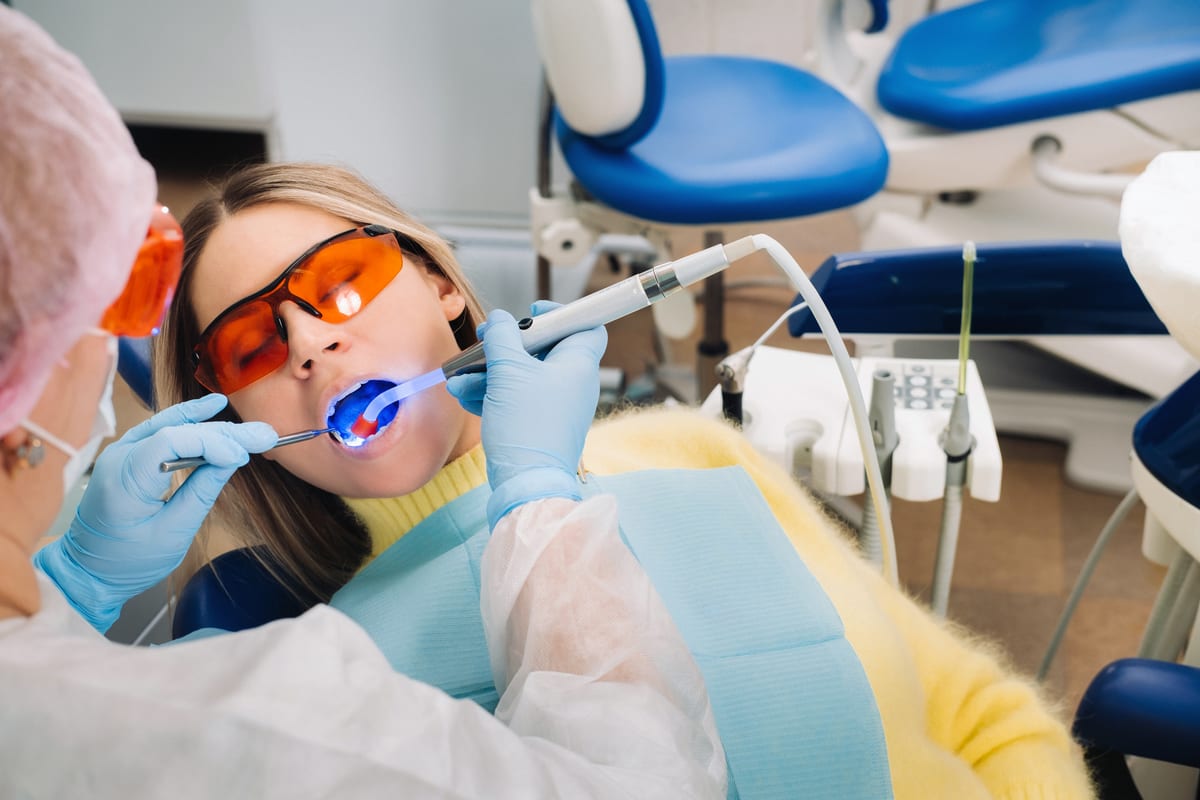
- Activation and timing: Depending on the system used, a light or heat source may activate the gel. The gel works for a set period before it is rinsed away.
- Post-treatment care instructions: Dr. Scott reviews what to eat, drink, and avoid in the hours following your appointment.
Most patients see noticeable results after a single appointment. Some may benefit from a follow-up session or a take-home maintenance kit. The entire in-office process typically takes under two hours. Sensitivity, if it occurs at all, is usually mild and temporary.
Conclusion: Making an Informed Decision About Whitening in Denver
Professional teeth whitening is a well-researched and generally safe cosmetic dental treatment for healthy adults. It does not damage enamel when performed correctly by a qualified dental professional. Temporary gum sensitivity and tooth sensitivity are the most common side effects, and both typically resolve quickly. The safest approach is always to have a thorough examination before beginning any whitening treatment. Dr. Desirea Scott at Denver Orthodontics & Dental Lounge is committed to helping Denver patients achieve brighter smiles without compromising the health of their enamel or gum tissue. Book Now to schedule your appointment with our team.
Frequently Asked Questions
Does professional teeth whitening damage enamel?
No. Scientific evidence does not support the idea that professional whitening damages enamel when used as directed. The bleaching agents penetrate enamel to break apart stain molecules without removing the enamel itself. Temporary porosity and sensitivity can occur, but these effects resolve within a day or two after treatment.
How long does tooth sensitivity last after professional whitening?
Most patients who experience sensitivity after professional whitening notice it for 24 to 48 hours. Using a sensitivity toothpaste before and after treatment can reduce discomfort. If sensitivity persists beyond two days, contact your dental provider for guidance.
Can I whiten my teeth if I have crowns or veneers?
Whitening agents do not change the color of dental restorations such as crowns, veneers, or bonding. If you have restorations on your front teeth, whitening your natural teeth may create a visible color difference. Dr. Scott will evaluate your specific situation and recommend the most appropriate treatment plan.
How is professional whitening different from over-the-counter strips?
Professional whitening uses higher concentrations of bleaching agents under controlled, supervised conditions. Custom-fitted trays protect your gum tissue, and a pre-treatment examination identifies any risks before treatment begins. Over-the-counter strips use lower concentrations and offer no individualized assessment or gum protection.
Who should not get professional teeth whitening?
Pregnant or nursing women, children with developing enamel, and patients with untreated cavities, active gum disease, or severe gum recession should avoid whitening or consult their dentist first. Patients with peroxide allergies should also discuss alternatives with their dental provider before proceeding.