


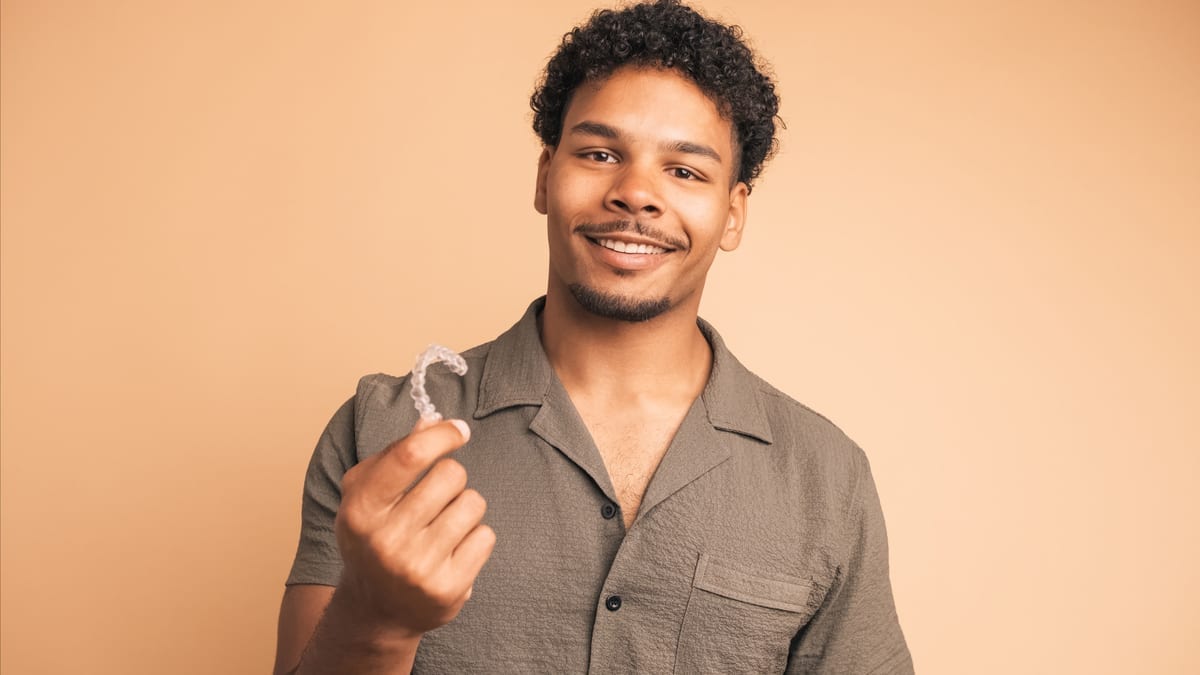
If you’re currently in Invisalign treatment, you’ve probably wondered why your trays swap out so frequently. Understanding why your Invisalign trays change every two weeks — and what that actually does in Denver orthodontic offices like ours — helps you stay motivated and committed. At Denver Orthodontics & Dental Lounge, Dr. Desirea Scott believes informed patients get better results. This article breaks down the science behind your aligner schedule in plain, simple language.
How Invisalign Actually Moves Your Teeth Step by Step
Teeth don’t move because plastic pushes them. They move because pressure triggers a biological process inside your jawbone. When a tray applies gentle, consistent force, your body responds by dissolving bone on one side of the tooth root. It then builds new bone on the opposite side. This process is called bone remodeling.
Each aligner is designed to shift specific teeth by a tiny fraction of a millimeter. The shift is so small you can barely see it with the naked eye. But over dozens of trays, those tiny movements add up to a dramatic transformation. Think of it like turning a dial one small click at a time.
Here is a simplified breakdown of what happens during each two-week cycle:
- You insert a new tray that applies targeted pressure to specific teeth.
- Your bone tissue begins remodeling within 48 to 72 hours of consistent wear.
- By the end of week one, teeth have started to shift into the new position.
- By the end of week two, the tray fits loosely — that’s your cue to move on.
- The next tray continues from exactly where the last one left off.
Why Two Weeks Is the Sweet Spot for Invisalign Tray Changes in Denver
You might wonder — why not change trays every week to finish faster? Or every month to reduce hassle? The two-week schedule exists for a precise biological reason. Bone remodeling takes time, and rushing it can cause root damage or relapse.
Changing too quickly means your bone hasn’t fully stabilized. The tooth moves but the supporting structure isn’t ready. That creates instability and can undo progress. Waiting too long, on the other hand, lets the bone fully harden around the current position. Then the next tray has to work harder from the start.
Two weeks hits the ideal window. The bone is still in a semi-fluid remodeling state. The next tray can seamlessly continue the movement without forcing a restart. Dr. Desirea Scott customizes this schedule for each patient based on their unique treatment plan, because not every patient switches at exactly the same interval.
The Role of Attachments and How They Supercharge Your Aligners
Many patients are surprised when they receive small tooth-colored bumps bonded to certain teeth. These are called attachments, and they are a key part of how complex movements happen. Standard aligners can handle straightforward shifting. But some teeth need to rotate, tip, or move vertically — and flat plastic alone can’t grip them well enough.
Attachments act like tiny handles. They give the aligner something to push or pull against for more precise control. Think of trying to open a door with no doorknob — attachments are that doorknob. They dramatically expand what Invisalign can accomplish without wires or brackets.
Common reasons your orthodontist places attachments include:
- Rotating stubborn canine or premolar teeth
- Extruding teeth that sit too low in the gumline
- Achieving larger root movements that require extra leverage
- Correcting deep bites or open bites more effectively
Attachments are typically removed at the end of treatment. Most patients barely notice them after the first few days.
What Refinements Are and Why They’re a Normal Part of Treatment
Even with perfect compliance, your teeth may not finish exactly where Invisalign predicted. This happens because bone remodeling is a biological process — not a mechanical one. Bodies respond at different rates. That’s where refinements come in.
A refinement is a new set of aligners created mid-treatment to fine-tune your results. Dr. Desirea Scott takes new scans, updates your digital treatment plan, and orders additional trays. This isn’t a sign that something went wrong. It’s a built-in feature of the Invisalign system to ensure you reach your final goal.
Refinements are more common than most patients expect. Many comprehensive cases go through at least one round. The key is continued commitment — wearing your trays 20 to 22 hours per day keeps you on track and reduces the need for extensive refinements.
Patients who skip or shorten wear time are far more likely to need multiple refinement rounds. Each missed hour slows bone remodeling and reduces aligner effectiveness. Consistency is genuinely the most important factor in your outcome.
Complementary Treatments That Pair Well With Invisalign
Once your Invisalign treatment concludes, many Denver patients choose to enhance their results further. Straight teeth look even better when they’re also bright and healthy. Teeth Whitening Denver is one of the most popular follow-up treatments our patients request after completing their aligner journey.
For patients with more complex jaw concerns, orthodontics sometimes works alongside surgical options. Orthognathic Surgery Denver addresses skeletal misalignment that aligners alone cannot fully correct. Dr. Desirea Scott evaluates each patient individually to determine the most comprehensive path to a healthy, confident smile.
Combining treatments thoughtfully means your results look natural and last longer. Your smile is a system — aligning, whitening, and supporting jaw health all work together for the best outcome.
Conclusion: Trust the Process and Trust Your Tray Schedule
Every two-week tray change represents a carefully calculated step in your transformation. The biology, the timing, and the technology all work together with precision. Understanding the process makes it easier to stay compliant and committed — especially on the days when treatment feels long. Dr. Desirea Scott and the team at Denver Orthodontics & Dental Lounge are here to support you at every stage. Book Now to schedule your appointment with our team.
Frequently Asked Questions
Why do my Invisalign trays feel tight at first but loose by the end of two weeks?
The tightness you feel on day one is the aligner applying pressure to move your teeth. As bone remodeling progresses, the teeth gradually shift into the tray’s intended position. By the end of two weeks, the fit feels looser because your teeth have caught up to where the tray wanted them to be. That looseness signals that it’s time to move to the next set of aligners.
Can I switch my Invisalign trays early to finish treatment faster?
Switching trays too early is not recommended and can actually slow down your overall progress. Bone remodeling needs adequate time to stabilize each new tooth position. If you skip ahead before the bone is ready, you risk teeth returning to their previous positions. Always follow the schedule Dr. Desirea Scott prescribes for safe, effective results.
What happens if I forget to wear my aligners for a day?
Missing a full day of wear disrupts the consistent pressure your bone tissue needs to remodel properly. For most patients, one missed day has minimal long-term impact if wear resumes immediately. However, repeated missed days accumulate and can extend your treatment timeline significantly. Aim for 20 to 22 hours of daily wear to stay on track.
Are Invisalign attachments noticeable to other people?
Attachments are made from tooth-colored composite resin that closely matches your natural enamel shade. Most people won’t notice them during normal conversation or interaction. They are more visible up close, but far less obvious than traditional metal brackets. They are removed completely when your treatment concludes, leaving no permanent marks on your teeth.
How many rounds of refinements do most Invisalign patients need?
The number of refinements varies significantly from patient to patient. Simple cases may require none at all, while more complex treatments may involve one or two rounds. Compliance with your wear schedule is the biggest factor in minimizing refinements. Patients who consistently wear their trays as directed tend to need fewer additional aligners overall.